


7th International Conference on Big Data and Machine Learning (BDML 2026)
BDML 2026
- URL: https://www.bdml2026.org/
- Event Date: 2026-06-27 ~ 2026-06-28
- Submission Date: 2026-04-04
- Location: Copenhagen, Denmark
Computer Security & Cryptography Computer Vision & Pattern Recognition Computing Systems Engineering & Computer Science (General) Human Computer Interaction Theoretical Computer Science
7th International Conference on Big Data and Machine Learning (BDML 2026)
June 27 ~ 28, 2026, Copenhagen, Denmark
Scope
7th International Conference on Big Data and Machine Learning (BDML 2026) will act as a major forum for the presentation of innovative ideas, approaches, developments, and research projects in the areas of Big Data and Machine Learning. It will also serve to facilitate the exchange of information between researchers and industry professionals to discuss the latest issues and advancement in the area of Big Data and Machine Learning.
Authors are solicited to contribute to the conference by submitting articles that illustrate research results, projects, surveying works and industrial experiences that describe significant advances in the areas of Big Data and Machine Learning.
Topics of interest include, but are not limited to, the following
Foundation Models, Generative AI and Multimodal Systems
- Large Language Models (LLMs): architectures, scaling laws, training, alignment
- Multimodal foundation models (vision language, audio text, video language)
- Retrieval Augmented Generation (RAG) and knowledge grounded AI
- Efficient fine tuning, distillation, quantization and model compression
- Diffusion models and generative modeling for images, audio, video and 3D
- Safety, robustness and evaluation of foundation models
Machine Learning Theory, Algorithms and Optimization
- Optimization methods for deep and large scale models
- Representation learning and self supervised learning
- Probabilistic modeling, Bayesian methods and uncertainty quantification
- Meta learning, few shot learning and transfer learning
- Online, continual and lifelong learning
- Causal inference, causal discovery and counterfactual reasoning
ML Systems, Infrastructure and Scalable Computing
- Distributed training systems, parallelization strategies and scheduling
- ML compilers, accelerators and hardware -software co design
- Cloud native, edge and serverless ML systems
- High performance computing for ML and data intensive workloads
- Inference optimization, serving systems and low latency ML pipelines
- Energy efficient ML, Green AI and sustainable computing
Big Data Systems, Management and Engineering
- Scalable data processing architectures and dataflow systems
- Data engineering, pipelines, orchestration and workflow automation
- Data integration, cleaning, quality and governance
- Real time and streaming data analytics
- Data compression, indexing and query optimization
- Privacy preserving data management (DP, MPC, HE)
Data Mining, Knowledge Discovery and Graph Intelligence
- Large scale data mining algorithms and theory
- Graph neural networks (GNNs) and graph representation learning
- Knowledge graphs, reasoning and graph mining
- Temporal, spatial and spatiotemporal data mining
- Anomaly detection, fraud detection and rare event modeling
- Recommender systems and personalization
Responsible, Trustworthy and Secure AI
- Explainability, interpretability and transparency in ML
- Fairness, bias mitigation and ethical AI
- AI governance, policy and regulatory compliance
- Adversarial ML, robustness and secure model training
- Privacy preserving ML (federated learning, DP, secure aggregation)
- ML for cybersecurity and threat intelligence
Distributed, Federated and Edge Intelligence
- Federated learning algorithms, systems and applications
- Collaborative and decentralized ML
- Edge AI, on device learning and TinyML
- 6G, IoT and cyber physical systems for ML and data analytics
- Resource constrained learning and communication efficient ML
Autonomous Agents, RL and Decision Making
- Reinforcement learning theory and applications
- Multi agent systems and coordination
- LLM based agents and tool using AI systems
- Planning, control and sequential decision making
- Simulation based learning and digital twins
Scientific ML, Simulation and Domain Applications
- ML for physics, chemistry, biology and materials science
- Climate modeling, environmental analytics and sustainability
- Healthcare analytics, medical AI and computational biology
- Finance, economics and risk modeling
- Smart cities, transportation and mobility analytics
- Multimedia, vision, speech and natural language analytics
Evaluation, Benchmarking and Data Centric AI
- Dataset creation, curation and governance
- Data centric AI methodologies and tooling
- Benchmarking ML systems and reproducibility studies
- Robust evaluation protocols for large scale models
- Synthetic data generation and simulation driven datasets
Paper Submission
Authors are invited to submit papers through the conference Submission System by April 04, 2026. Submissions must be original and should not have been published previously or be under consideration for publication while being evaluated for this conference. The proceedings of the conference will be published by Computer Science Conference Proceedings in Computer Science & Information Technology (CS & IT) series (Confirmed).
Selected papers from BDML 2026, after further revisions, will be published in the special issue of the following journal.
- International Journal of Data Mining & Knowledge Management Process (IJDKP)
- International Journal of Database Management Systems (IJDMS)
- Machine Learning and Applications: An International Journal (MLAIJ)
- Advances in Vision Computing: An International Journal (AVC)
- International Journal of Grid Computing & Applications (IJGCA)
- Information Technology in Industry (ITII)
Important Dates
- Submission Deadline: April 04, 2026
- Authors Notification: May 23, 2026
- Registration & camera - Ready Paper Due: May 30, 2026
Contact Us
Here's where you can reach us : bdml@bdml2026.org (or) bdmlconfe@yahoo.com
Event Promotion

|
|
The 13th International Conference on Quantum Dots (QD 2026) |
| 2026-05-17 ~ 2026-05-22 |

|
|
The 22nd International Symposium on the Physics of Semiconductors and Applications (ISPSA 2026) |
| 2026-06-28 ~ 2026-07-02 |

|
|
The 15th Asia-Pacific Conference on Transportation and the Environment (APTE 2026) |
| 2026-07-08 ~ 2026-07-10 |

|
|
ACEM26 / Structures26 (ACEM26) |
| 2026-08-24 ~ 2026-08-25 |
Journal Promotion

|
| Acta Koreana (Acta Koreana) |

|
| Acta Via Serica (AVS) |

|
| Advances in Concrete Construction (Advances in Concrete Construction ) |

|
| Advances in Nano Research (Advances in Nano Research) |

|
| Computers and Concrete (Computers and Concrete) |

|
| Earthquakes and Structures, An International Journal (Earthquakes and Structures) |

|
| Geomechanics and Engineering (Geomechanics and Engineering) |
|
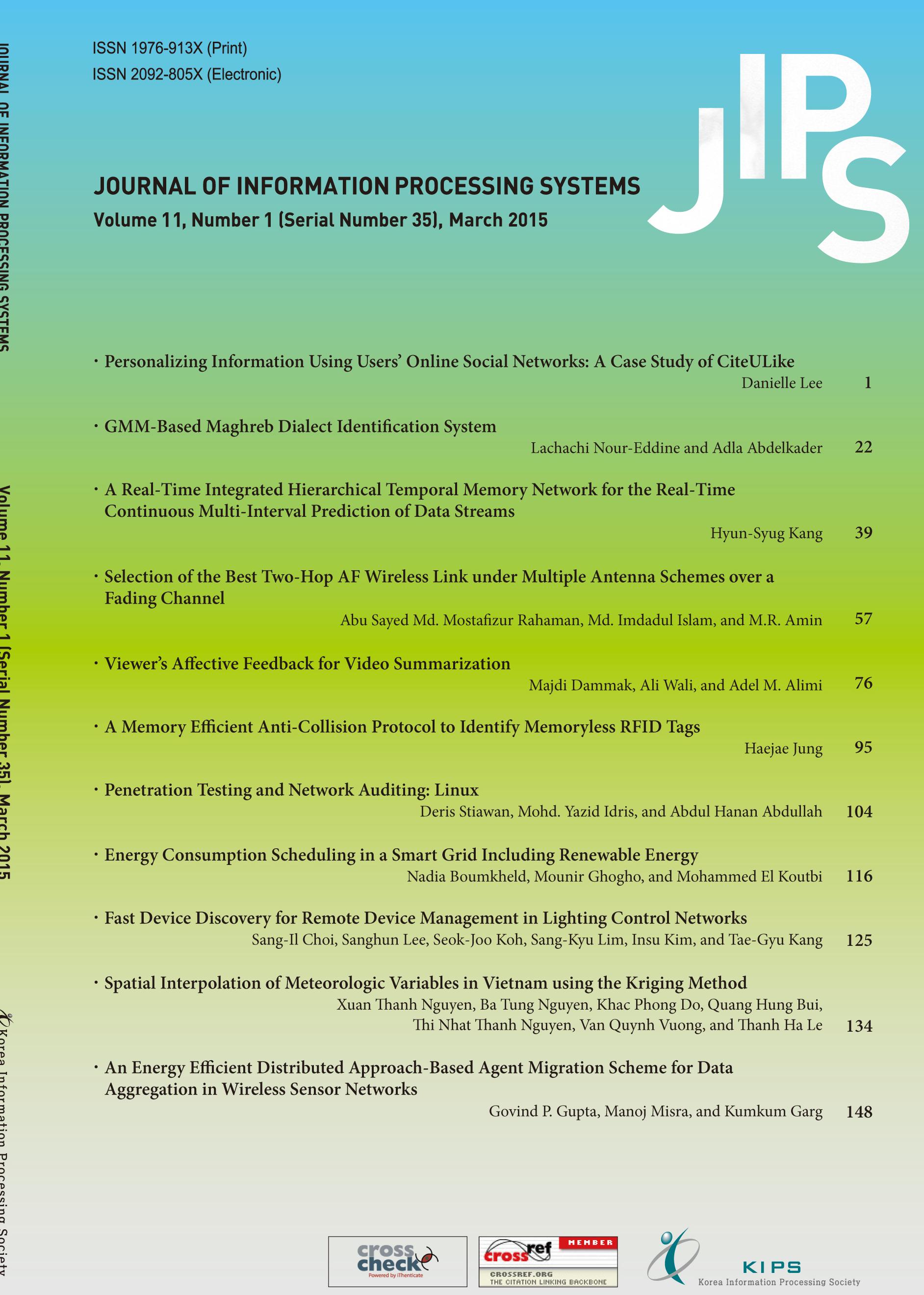
| Journal of Information Processing Systems (JIPS) |

|
| Journal of Internet Computing and Services (KSII - JICS) |

|
| Membrane and Water Treatment (MWT) |

|
| Smart Structures and Systems (Smart Structures and Systems) |

|
| Steel and Composite Structures, An International Journal (Steel and Composite Structures) |

|
| Structural Engineering and Mechanics, An International Journal (Structural Engineering and Mechanics) |

|
| Wind and Structures, An International Journal (Wind and Structures) |




MANUSCRIPTLINK © 2015 -
